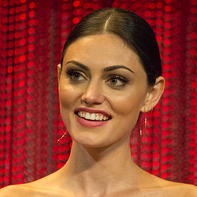
Professional snowboarder; World Cup bronze medalist, Gold medal in slopestyle at 2011 World Championships, Big Air title at the 2011–2012 TTR World Tour.
Beyond the ten classical planets, a chart is anchored by a few other points worth reading.
Ascendant (ASC) — the sign rising on the eastern horizon at birth. It shapes outward manner. On the wheel, the horizontal axis is the Ascendant / Descendant axis. If birth time is unknown, this won't appear.
Midheaven (MC) — the highest point in the sky at birth. It points to vocation and public self. On the wheel, the vertical axis is the MC / IC axis. If birth time is unknown, this won't appear.
Chiron — a small body that moves between Saturn and Uranus, read as a sign of where lessons live.
North Node — not a body but a mathematical point of the Moon's orbit. It marks the direction of growth.
North Node in Capricorn18° 54′℞
Chiron in Cancer29° 03′
Your chart next
The sky at your birth.
Drawn freely, read at your own pace. And if you want a closer study, the report walks through every planet and pattern in your sky.
Aspects are the angles between two planets — the geometric relationships that shape how those planets talk to each other in a chart. A conjunction fuses them; an opposition sets them at odds; a trine lets them flow.
We sort them here by strength. Tight orbs come first — the closer the angle, the louder the aspect sings.
Moon conjunction Mercury
1° 16′
Venus conjunction Mars
2° 37′
Mercury quincunx Neptune
0° 37′
Mercury conjunction Jupiter
2° 15′
Sun trine Pluto
2° 54′
Mars sextile MC
3° 07′
Jupiter square Pluto
0° 45′
Moon conjunction Jupiter
3° 31′
Sun opposition North Node
1° 38′
Chiron sextile Ascendant
2° 27′
Moon quincunx Neptune
1° 53′
Moon quincunx Uranus
1° 54′
Mercury square Pluto
3° 00′
Sun opposition Neptune
5° 18′
Pluto sextile North Node
1° 16′
Moon square Pluto
4° 16′
Uranus conjunction Neptune
3° 46′
Saturn opposition Chiron
5° 27′
Jupiter quincunx Neptune
1° 39′
Neptune sextile Pluto
2° 24′
A chart pattern is a meaningful geometric shape formed by three or more planets connected by aspects. These configurations are read as unified dynamics rather than individual aspects.
Classic includes the shapes established in modern astrology — T-Squares, Grand Trines, and more. Extended adds geometric configurations that carry meaning beyond traditional astrology.
No classic patterns in this chart — the configurations here are in Extended.
01
Wedge
Focus: Pluto
Neptune · Pluto · Sun — an opposition with a third planet trining one end and sextiling the other; tension finds its outlet.
Planets in this pattern
Neptune15° 14′ Capricorn
Pluto17° 38′ Scorpio
Sun20° 32′ Cancer
02
Wedge
Focus: Pluto
North Node · Pluto · Sun — an opposition with a third planet trining one end and sextiling the other; tension finds its outlet.
Planets in this pattern
North Node18° 54′ Capricorn
Pluto17° 38′ Scorpio
Sun20° 32′ Cancer
Chart signature
The chart signature is the set of high-level patterns that shape the chart's overall character — elemental and modal balance, overall shape on the wheel, and a handful of structural observations.
By element
Fire
4
Earth
2
Air
1
Water
1
By modality
Cardinal
1
Fixed
4
Mutable
3
The chart forms a Seesaw shape
Planets gather in two opposite groups — you live in the push and pull between them.
Ascendant is unaspected
Ascendant stands alone — its themes operate without checks from other bodies.
Saturn is unaspected
Saturn stands alone — its themes operate without checks from other bodies.
No personal planets below the horizon
The private, formative houses below the horizon are empty.


 Sun in Cancer20° 32′
 Moon in Leo13° 21′
 Mercury in Leo14° 37′
 Venus in Virgo1° 19′
 Mars in Leo28° 42′
 Jupiter in Leo16° 53′
 Saturn in Aquarius4° 30′℞
 Uranus in Capricorn11° 28′℞
 Neptune in Capricorn15° 14′℞
 Pluto in Scorpio17° 38′℞
 North Node in Capricorn18° 54′℞
 Chiron in Cancer29° 03′